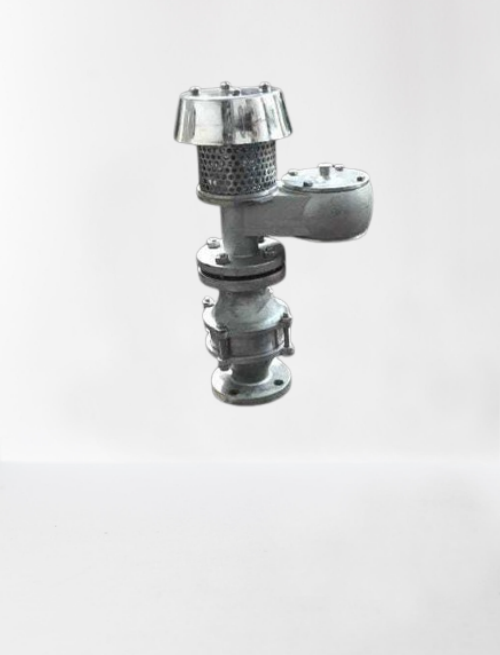
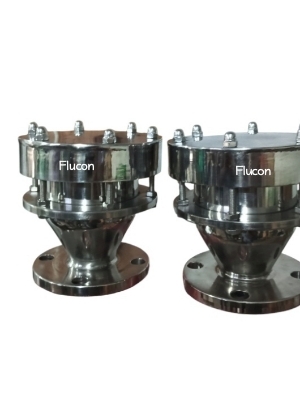
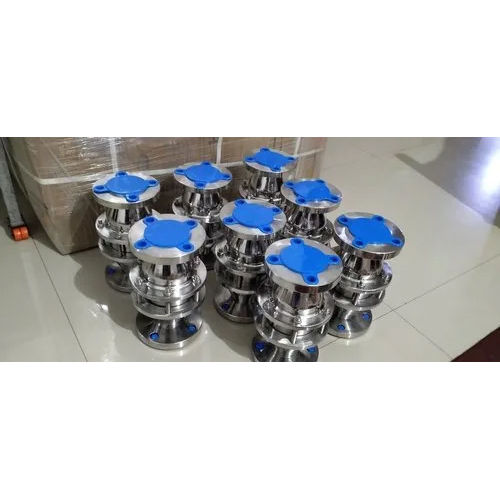
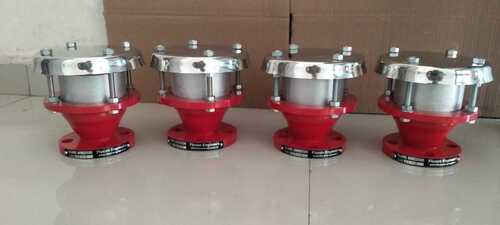
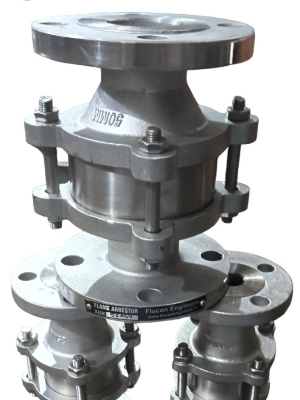
About 1.5" Flame Arrestor with Breather Valve
Here is a clear complete and easytouse explanation ABOUT a Breather Valve PressureVacuum Relief Valve If you want it shorter or more technical just tell me
Breather Valve PressureVacuum Relief Valve Overview
A breather valve is a safety device installed on atmospheric or lowpressure storage tanks to control pressure and vacuum inside the tank It allows the tank to breathe as the liquid level and temperature change
It prevents tank collapse overpressure and product loss
1 Purpose
Breather valves are designed to
Relieve excess pressure when vapors expand
Relieve vacuum when liquid is withdrawn or during cooling
Reduce evaporative losses VOC emissions
Protect tank integrity under API 650 API 2000 conditions
They are often combined with endofline flame arrestors for fire safety
2 How a Breather Valve Works
Inside the valve are two elements
Pressure Pallet
Opens when tank pressure rises above the setpoint
Allows vapors to escape to the atmosphere or vapor recovery system
Vacuum Pallet
Opens when tank pressure falls below the vacuum setpoint
Allows air to enter the tank to equalize pressure
Both pallets are typically
Weighted or
Springloaded
Setpoints are usually very low inches of water column
3 Typical Construction
Body Aluminum carbon steel stainless steel
Pallets SS or composite
Seals BunaN Viton PTFE
Optional Flame arrestor weatherhood intake screen
4 Applications
Breather valves are used in
Petroleum storage gasoline diesel ethanol
Chemical tanks solvents organics corrosive liquids
Water wastewater systems
API atmospheric tanks
Biogas or vapor recovery systems
5 Important Specifications
When selecting a breather valve you need
A Setpoints
Pressure setpoint eg 1 to 8 WC
Vacuum setpoint eg 1 to 4 WC
B Flow Capacity
Must meet API 2000 venting requirements for
Normal breathing
Fire emergency venting
C Material Compatibility
Based on stored liquidvapor
D Accessories
Flame arrestor endofline or inline
Weatherhood for outdoor use








 Send Inquiry

 Send Inquiry
 Send Inquiry
 Send SMS